What counts as a pool repair?
A pool repair is any fix to the equipment, plumbing, or surfaces that keep the pool circulating, filtering, heating, and holding water. Typical jobs include pump and motor problems, filter trouble, heater faults, leaking lines or fittings, and damaged tile or finish.
Routine cleaning and chemical balancing are maintenance, not repair. The line blurs when poor upkeep causes a repair, such as a clogged filter that strains a pump or scale that builds on tile.
What are the signs your pool needs repair?
The most common signs are weak return flow, a pump that is loud, hot, or loses prime, water that stays cloudy or green even when chemicals look right, a heater that will not fire, and a water level that drops faster than evaporation explains.
Evaporation is heavy in the Arizona desert heat, so a drop alone does not prove a leak. A simple bucket test, where you compare the pool level with a bucket of water set on a step over a day or two, helps tell the two apart.
Other warning signs include air bubbles at the returns, a pressure gauge reading well above its normal level, wet soil near the equipment pad, and cracks or hollow-sounding tile.
Should I repair or replace pool equipment?
As a general rule, repair makes sense when the part is a single failure on otherwise sound equipment, such as a capacitor, seal, or valve. Replacement is worth weighing when the unit is old, keeps failing, or the repair cost approaches a good share of a new unit.
Older single-speed pumps also use more electricity than modern variable-speed models, so replacement can be reasonable even when a repair is possible. Filters with cracked tanks or worn-out grids or cartridges are usually better replaced than patched.
Can I fix pool problems myself?
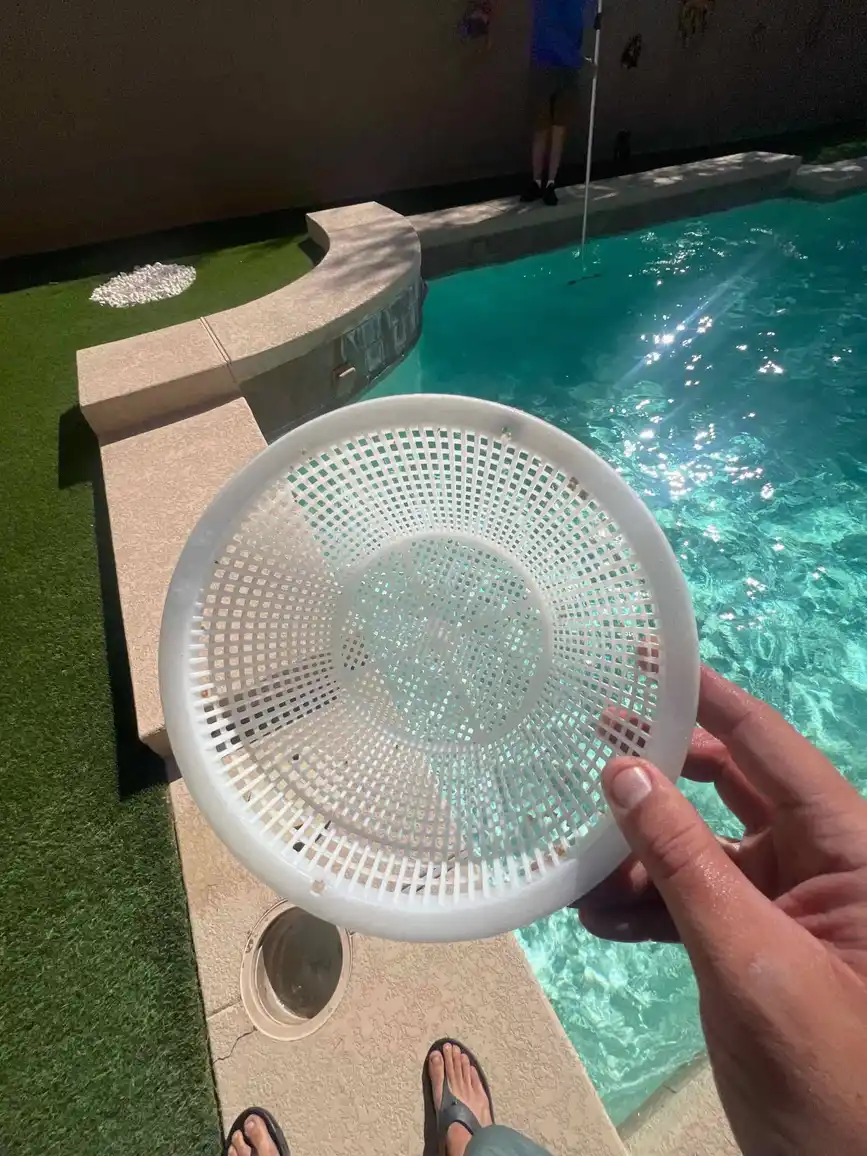
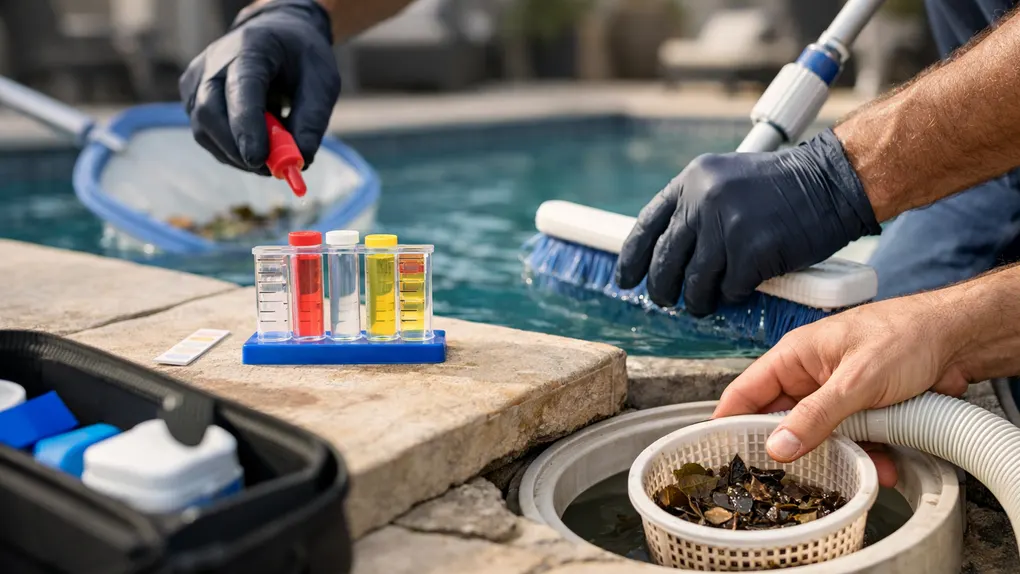
Simple tasks are reasonable for a homeowner: cleaning skimmer and pump baskets, rinsing cartridges, and checking the pressure gauge. Anything involving electrical connections, gas heaters, buried plumbing, or finding a leak is better left to a pool technician.
Mistakes with pumps and heaters can damage other equipment, and a leak that is guessed at wrongly can waste water and delay the real fix.
How do I get a pool repair done in Phoenix?
Start by noting what you see: the symptoms, when they began, and what the equipment is doing. A technician can then run diagnostics on the pump, filter, heater, and plumbing to find the actual cause rather than guessing at parts.
Blue Kiwi Pools works out of Mesa and serves Phoenix and nearby towns. You can ask for a quote to describe the problem and talk through next steps.
How can I prevent repairs?
Regular maintenance prevents many repairs. Keep baskets clear, clean filters on schedule, keep water chemistry balanced, and keep the water level high enough that the pump never runs dry.
Desert sun, heat, and dust are hard on pool equipment, so periodic equipment inspections help catch worn seals, failing motors, and early leaks before they turn into larger jobs.
Questions we hear
What is the most common pool repair?
Pump and motor problems are among the most common, along with filter issues and leaks. They are also the repairs most often traced back to clogged baskets, dirty filters, or low water level.
How do I know if my pool is leaking?
Try the bucket test: set a bucket of water on a pool step with its water line matching the pool level, then compare the two after a day or two. If the pool drops noticeably more than the bucket, you likely have a leak and should have it diagnosed.
Why is my pool pump making noise?
Loud noise is often worn bearings, a clogged impeller, or air getting in through a loose lid or fitting. Shut the pump off if it screams or overheats, and have it checked before it fails.
Why won't my pool heater turn on?
Common causes include low water flow from a dirty filter, a tripped switch, a faulty thermostat, or ignition and gas issues. Check that the pump is running and the filter is clean, then call a technician for the rest.
Is it cheaper to repair or replace a pool pump?
A minor part such as a capacitor or seal is usually cheaper to repair. If the motor is worn out or the pump is very old, replacement often makes more sense and may save energy.