What does basic pool maintenance include?
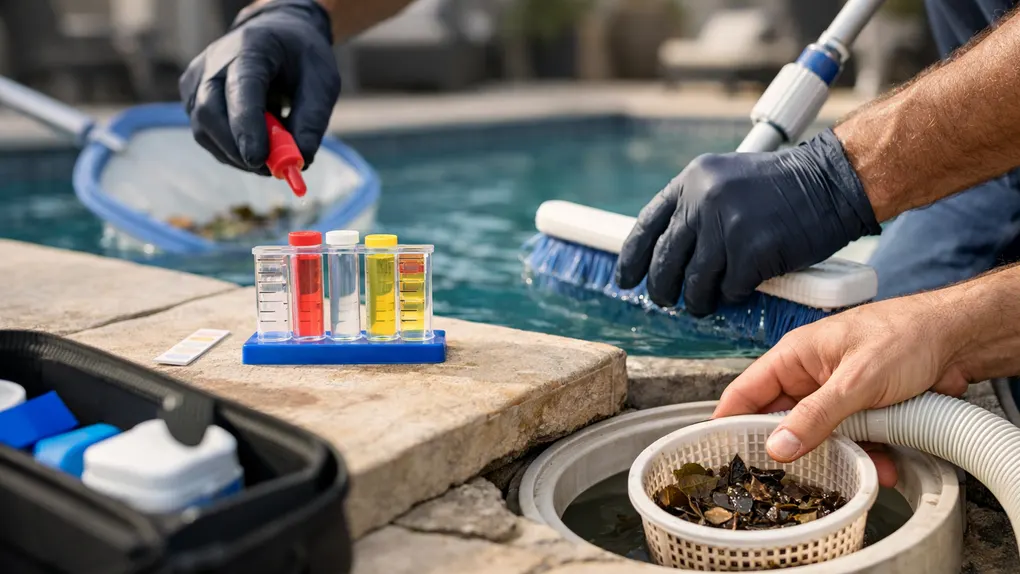
A basic routine covers four things: water chemistry, debris removal, circulation and filtration, and a quick look at the equipment. Skip any one of them and the others get harder.
For water chemistry, the usual targets are free chlorine around 1 to 3 ppm, pH between 7.2 and 7.6, total alkalinity around 80 to 120 ppm, and cyanuric acid (stabilizer) around 30 to 50 ppm if you use stabilized chlorine. Calcium hardness is usually kept somewhere between 200 and 400 ppm.
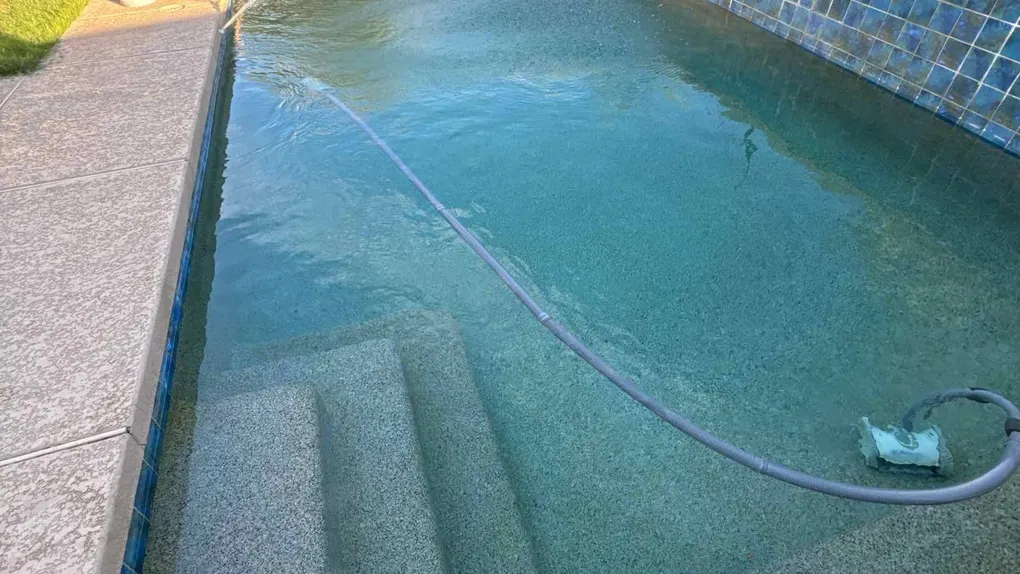
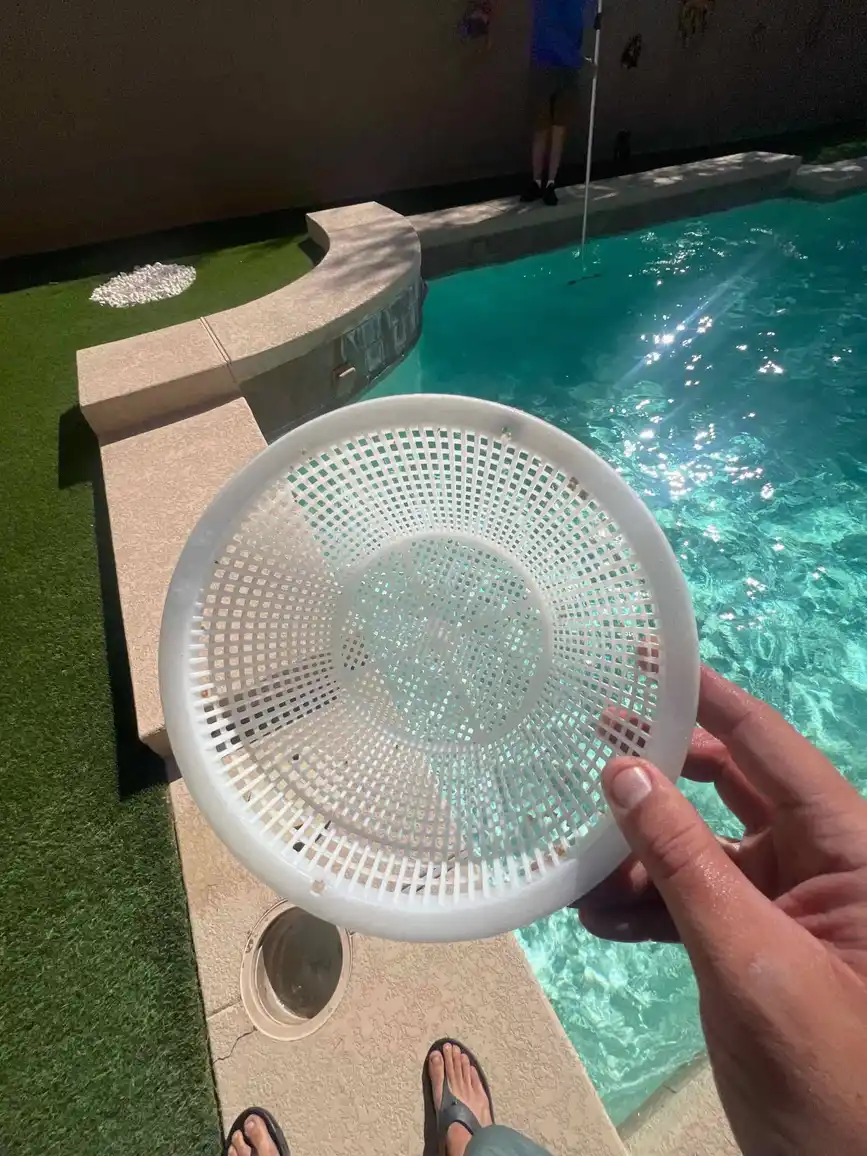
For debris, that means skimming the surface, brushing the walls and steps, vacuuming the floor as needed, and emptying the skimmer and pump baskets. For circulation, it means running the pump long enough each day to turn over the water and keeping the filter clean.
How often should a pool be cleaned and maintained?
Most pools need some attention every week, with chemistry checked two or three times a week during swim season. Skimming is best done every day or two, and brushing and basket-emptying about once a week.
The filter needs less frequent care. Cartridge filters are commonly rinsed or cleaned every few weeks to a few months depending on use and debris, and deep cleaned once or twice a year. Pools that get heavy use, lots of leaves, or a lot of sun usually need more frequent checks, because chlorine burns off faster and debris loads the filter sooner.
If you miss a week, the pool usually isn't ruined, but a second missed week is when cloudy or green water tends to start.
Can I do basic pool maintenance myself or should I hire a pool service?
Most homeowners can handle the weekly routine with a test kit, a pole, a brush and a net. The trade-off is time and consistency: the work is simple but never stops, and the chemistry takes some practice to get right.
Doing it yourself makes sense if you enjoy it, have the time every week, and are comfortable testing water and adding chemicals safely. Hiring a pool service makes sense if you travel, don't want to handle chemicals, or have already fought a green pool and don't want a repeat.
A middle path is to do the skimming and basket-emptying yourself and have a service handle the chemistry and the filter. If you're in Buckeye or elsewhere in the Valley and want a hand with basic pool maintenance or basic pool cleaning, Blue Kiwi Pools can help.
How do I keep my pool from turning green?
Green water almost always means the sanitizer level has dropped and algae has taken hold. The best prevention is steady chlorine, balanced pH, and enough circulation and filtration to keep the water moving.
The usual causes are a skipped week of testing, a pump that ran too few hours, a dirty or clogged filter, or a pH that drifted high enough to make chlorine less effective. Phosphates can also feed algae, which is why some pool owners test for them if algae keeps coming back.
Once a pool is green, it takes more than the normal routine: heavy sanitizing, brushing, and running and cleaning the filter until the water clears. If it keeps happening, something is off, such as the filter, the pump timing, or the chemistry, and it's worth having it looked at.
When is it more than basic maintenance: pool repairs or acid washing?
If the pool still looks or runs wrong after the basics are in order, the problem is probably equipment or surface related and not a maintenance issue.
Signs that point to repairs include a pump that is loud, loses prime or won't run, a filter pressure gauge that stays high after cleaning, a heater that won't fire, or water that keeps leaving the pool faster than it should. Those are repair or diagnostic jobs.
Acid washing is a different kind of job. It is a way of treating stained or heavily scaled plaster surfaces, and it is generally done when regular brushing and chemistry won't bring the surface back. It also removes a thin layer of surface, so it isn't something to do casually or often. Blue Kiwi Pools offers pool repairs and acid washing as well as basic maintenance.
Questions we hear
How many hours a day should a pool pump run?
Many pools run the pump for roughly 8 to 12 hours a day in swim season so the water turns over at least once. The right number depends on the pool's size, the pump, and how much debris the pool gets. If the water is cloudy or the filter is struggling, more run time can help.
How often should I test my pool water?
Two to three times a week is a good habit in swim season, and weekly at minimum. Test after heavy use, big storms, or when you add water or chemicals. A pool that is tested often is easier to keep clear.
Do I need to clean my pool filter?
Yes. A dirty filter slows circulation and makes it harder to keep the water clear. Cartridges are usually rinsed every few weeks to a few months and deep cleaned once or twice a year, though the right schedule depends on the pool and the filter type.
What is the difference between basic pool cleaning and basic pool maintenance?
Cleaning is the physical work: skimming, brushing, vacuuming and emptying baskets. Maintenance is the bigger routine that adds water chemistry, filter care and checking the equipment. A pool does best when it gets both.
Can a green pool be fixed without draining it?
Usually yes. Most green pools clear with heavy sanitizing, brushing, and running and cleaning the filter until the water is clear. Draining is generally reserved for water that is badly out of balance or can't be corrected any other way.