What is included in basic pool maintenance?
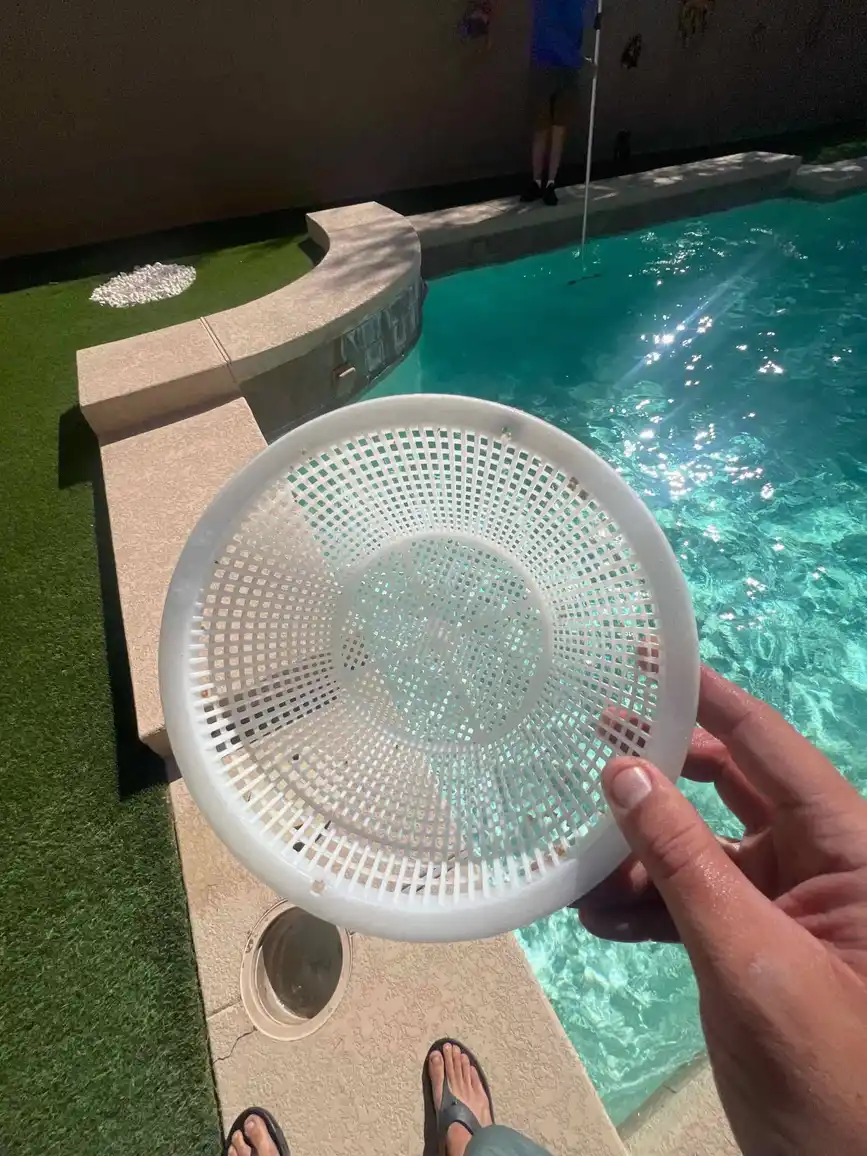
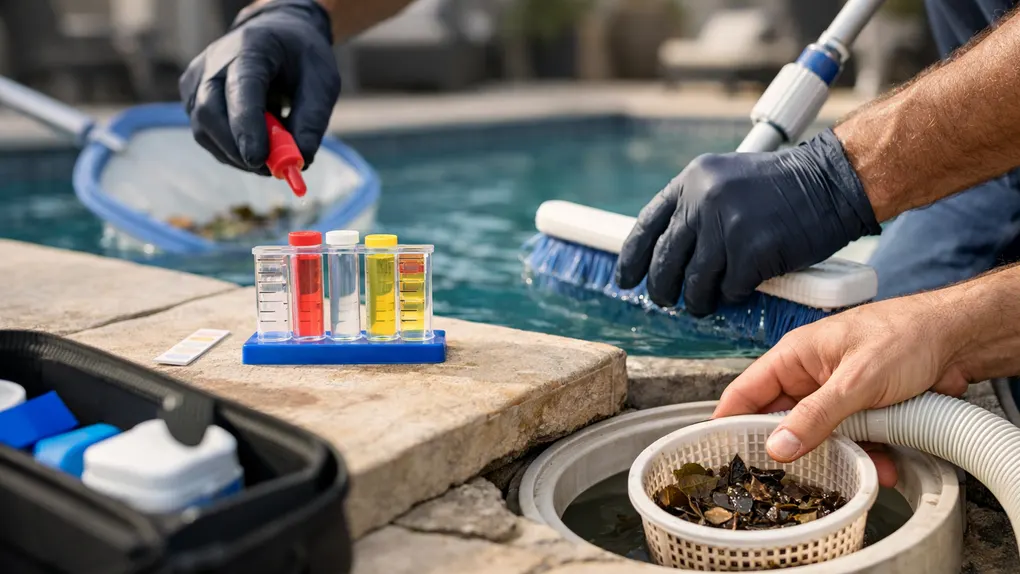
Basic pool maintenance covers the routine work that keeps a pool clean, balanced and running: skimming debris, brushing walls and steps, emptying skimmer and pump baskets, testing the water, adding chemicals as needed, and checking that the pump and filter are running normally.
Think of it as two halves. The first is physical cleaning, which removes leaves, bugs and dust before they sink and break down. The second is water care, which keeps the chemistry in range so algae and scale don't get a foothold.
Basic maintenance is not the same as a repair or a deep clean. Fixing a pump, replacing a filter, or clearing a green pool are separate jobs. Regular upkeep just makes them less likely.
How often should a pool get basic maintenance?
Most pools do best with a basic visit or routine once a week. Skimming and basket emptying may need to happen more often when there are a lot of leaves, blowing dust or heavy swimmer use.
A typical rhythm looks like this: skim and empty baskets every few days, brush and test the water weekly, rinse the filter every few weeks, and do a deeper filter clean a few times a year. Hot, sunny stretches burn through chlorine faster and speed up algae growth, so water may need testing more often then.
Skipping a week is not always a disaster, but a pool left for a few weeks in warm conditions can turn cloudy or green quickly, and that costs more time to fix than steady upkeep.
What should the water chemistry be in a basic maintenance routine?
For a typical chlorine pool, common target ranges are free chlorine around 1 to 3 ppm, pH between 7.2 and 7.6, total alkalinity around 80 to 120 ppm, calcium hardness around 200 to 400 ppm, and cyanuric acid (stabilizer) around 30 to 50 ppm. Your pool's surface type and equipment can shift these, so check what applies to yours.
PH and chlorine work together. If pH drifts too high, chlorine gets less effective even when the number on the test looks fine. If it drops too low, water can irritate swimmers and wear on equipment.
Test strips are fine for quick checks. A drop-based kit or a store water test gives more reliable numbers, especially for calcium hardness and stabilizer, which change slowly but matter over time.
How and when should the pool filter be cleaned?
Filters should be cleaned when pressure rises about 8 to 10 psi above the clean starting reading, or on a regular schedule if you don't watch the gauge. A clogged filter cuts water flow, which means weaker circulation and cloudier water.
Cartridge filters are usually rinsed with a hose every few weeks and soaked or deep cleaned a few times a year. Cartridges typically last a few years before they need replacing. Sand and DE filters are cleaned by backwashing, and DE filters need fresh powder after.
Blue Kiwi Pools offers filter cleanings, cartridge cleanings and filter installations, so if a filter is worn out or hard to clean, that can be handled as its own job beside regular maintenance.
Should I do pool maintenance myself or hire a pool service?
Doing it yourself works well if you have the time to be consistent every week and are comfortable handling pool chemicals. The cost is mostly your time and a test kit, but the trade-off is that missed weeks add up fast.
Hiring a pool service makes sense if you travel, don't want to handle chemicals, or keep fighting cloudy or green water. A regular visit also means someone is looking at the equipment each time and can notice early signs of trouble, like a noisy pump or a slow leak.
A mix works too: do the skimming and baskets yourself between visits, and let a service handle the testing, brushing and filter care. Blue Kiwi Pools provides basic pool maintenance and basic pool cleaning in Avondale, Phoenix, Mesa, Tempe, Peoria, Buckeye and other nearby towns.
When does a pool need more than basic maintenance?
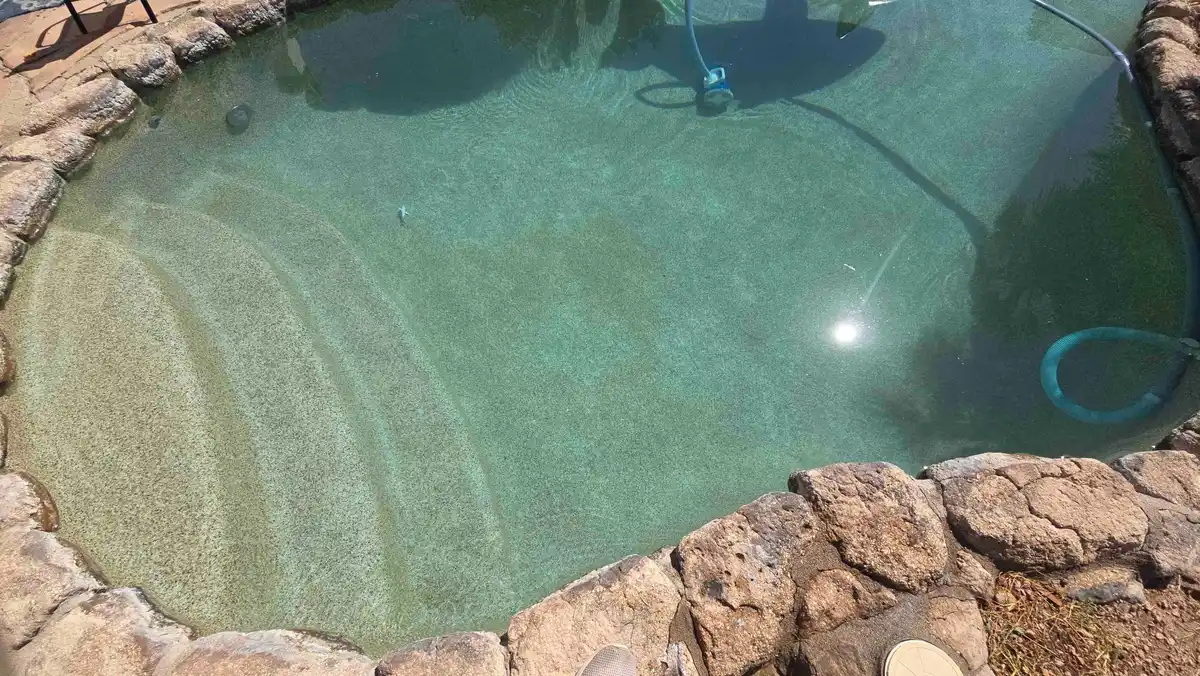
A pool needs more than the basics when routine care no longer keeps it clear or when something stops working. Signs include water that stays green or cloudy after balancing, scale or stains on the surface, a pump that is loud or losing prime, a heater that won't fire, or a filter pressure that climbs right after cleaning.
Some of these call for a repair, such as equipment or heater repairs. Others call for a bigger cleaning job, such as an acid wash for heavily stained plaster or a drain and refill when water chemistry is too far off to correct.
Catching these early through steady maintenance usually keeps the fix smaller. If you are not sure what is wrong, a diagnostic look at the pool and equipment is a sensible first step before spending on parts or treatments.
Questions we hear
How often should I clean my pool?
Skim and empty the baskets a few times a week, and brush and test the water once a week. Clean the filter every few weeks and do a deeper clean a few times a year. Heavy debris or lots of swimmers can mean more frequent work.
How many hours a day should a pool pump run?
Many residential pools need to run the pump about 8 to 12 hours a day so the water turns over at least once. Variable-speed pumps often run longer at lower speeds. If water gets cloudy or algae shows up, longer run times can help.
Why does my pool turn green even though I add chlorine?
Usually the cause is low free chlorine, high pH that weakens it, low stabilizer so sunlight burns it off, or poor circulation from a dirty filter. Test the water, correct the balance, brush the surfaces and clean the filter. A badly green pool may need a heavier cleaning than routine maintenance.
What is the difference between basic pool cleaning and pool maintenance?
Cleaning is the physical work of removing debris and brushing surfaces. Maintenance includes cleaning plus testing and balancing the water and checking that the equipment is running. Together they keep the pool in good shape.
Can I swim right after adding chemicals?
It depends on the product and the label. Many chlorine and pH adjusters call for running the pump and waiting a few hours before swimming, and the free chlorine and pH should be back in range. Always follow the directions on the container.