Skimming debris off the surface
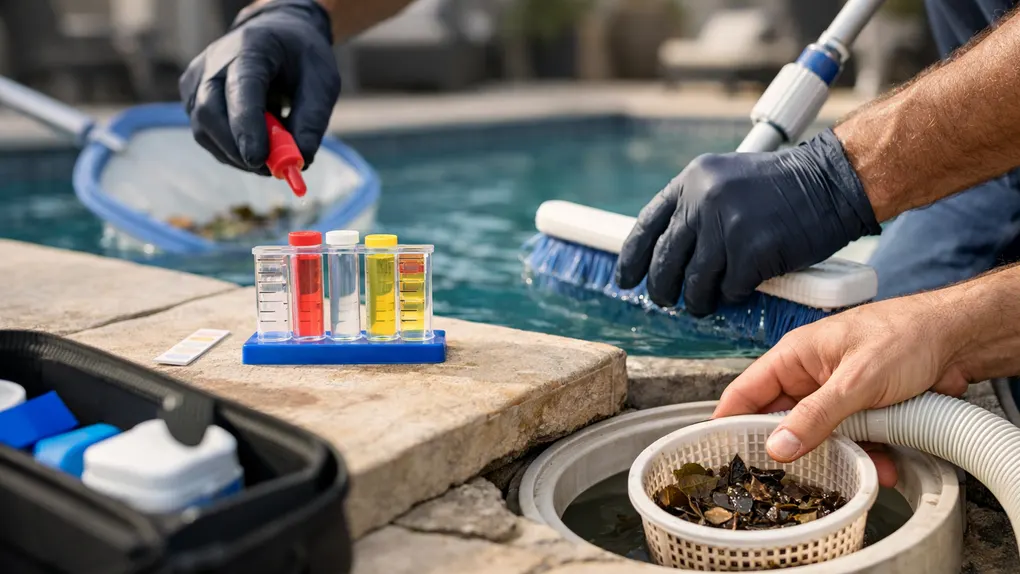
Skimming means lifting leaves, insects, dust and other floating debris off the water with a net before it sinks. It is the quickest step and the one that prevents the most trouble.
Debris that sinks starts to break down in the water. That feeds algae and uses up chlorine. In a desert climate with wind and dust, a pool can collect a surprising amount in just a few days, so skimming is worth doing often, even between full cleanings.
Brushing the walls, steps and tile line
Brushing loosens algae, film and mineral buildup from the pool surface before they take hold. Walls, steps, corners and behind ladders are the spots where water moves least, so growth starts there first.
Most pools need a brushing about once a week. A nylon brush suits plaster and painted finishes, and a stiffer brush is usually kept for stubborn spots only. Brushing also pushes dirt toward the floor so the vacuum can pick it up.
Vacuuming the pool floor
Vacuuming removes the fine dirt, sand and settled debris that the filter alone does not catch. It can be done with a manual vacuum head and pole, or with an automatic cleaner that runs on its own.
An automatic cleaner helps between visits, but it rarely reaches every corner and it needs its own bag or filter emptied. A weekly manual vacuum is still the more thorough approach, especially after wind or a storm.
Emptying the skimmer and pump baskets
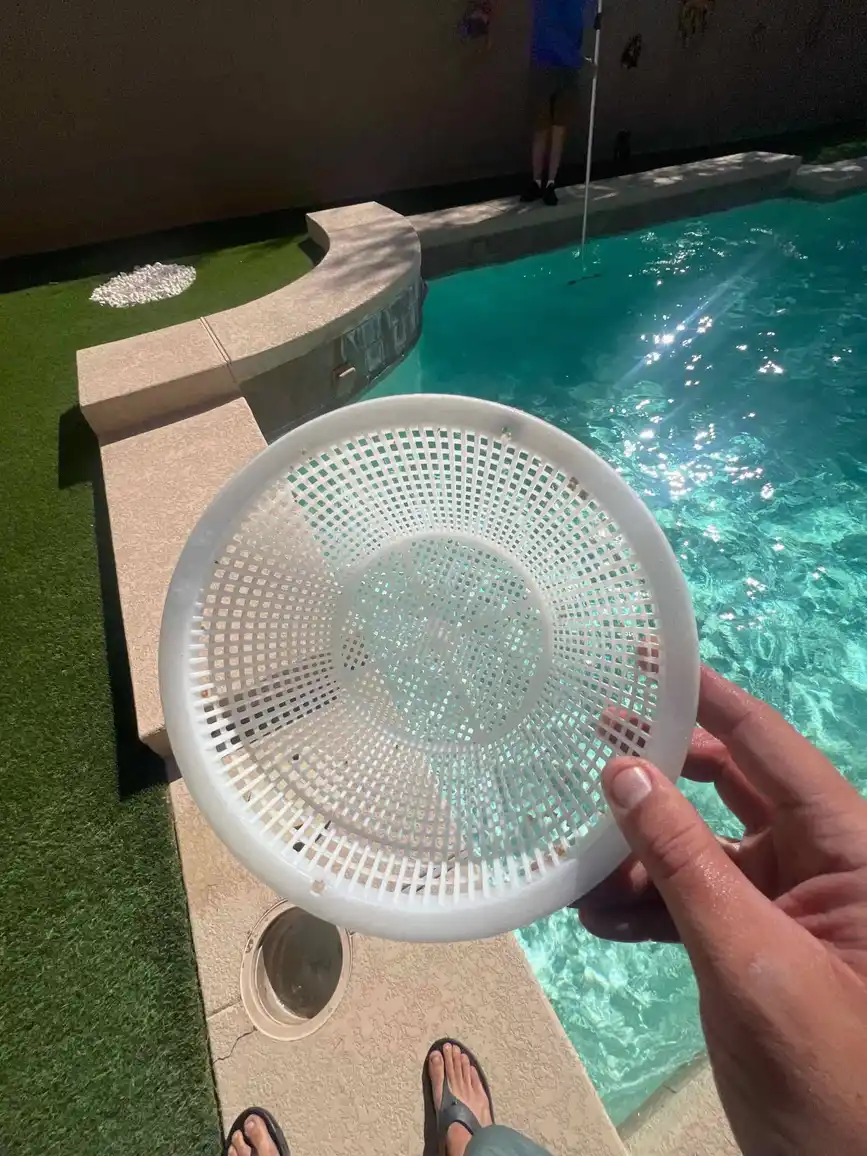
The skimmer basket and pump basket catch larger debris before it reaches the pump. When they fill up, water flow drops and the pump has to work harder.
Check them at least weekly, and more often when trees are dropping leaves or after a dust storm. A clogged basket is one of the most common and easily avoided causes of weak circulation.
Checking the filter, pump and water level
A basic cleaning visit includes a look at the equipment: the pressure gauge on the filter, whether the pump is running normally, and whether the water sits at the middle of the skimmer opening.
A rising filter pressure usually means the filter needs cleaning. Cartridge and sand or DE filters are cleaned on different schedules, often a few times a year for cartridges, depending on use. Water that is too low can let the pump suck air and damage it, while water that is too high keeps the skimmer from working properly. Heat and evaporation drop levels faster than many owners expect.
Testing and balancing the water
Testing checks chlorine, pH, alkalinity and stabilizer so the water stays safe and does not damage surfaces or equipment. Chemicals are then added to correct whatever is off.
Weekly testing is the usual standard for a residential pool. Cleaning without testing only handles what you can see. Water can look clear and still be out of balance, and that is what leads to cloudy water, scale and green pools later. Basic cleaning is not the same as an acid wash, a drain and refill, or a green pool recovery, which are bigger jobs for pools that have gone past routine upkeep.
Questions we hear
How often should a pool get basic cleaning?
Once a week is the usual rhythm for a residential pool. In hot months, or with heavy use, wind or nearby trees, skimming and baskets may need attention between visits.
What is the difference between basic pool cleaning and pool maintenance?
Cleaning is the physical work: skimming, brushing, vacuuming and baskets. Maintenance adds the water chemistry and equipment checks that keep the pool running well over time. Many services combine the two on one weekly visit.
Can I do basic pool cleaning myself?
Yes, the steps are simple and many owners do them. The hard parts are staying consistent every week and reading water test results correctly. If you are away often or unsure about chemicals, hiring help can save you from a bigger repair or cleanup.
Do I still need cleaning in winter?
Yes. Pools in mild climates keep collecting debris and can still grow algae when it is cooler, though chemical needs are lower. Many owners adjust their chlorine approach for the season rather than stop cleaning.
What does basic pool cleaning not cover?
It generally does not cover repairs, equipment replacement, deep cleaning of heavy stains or scale, or turning a green pool back to clear. Those are separate jobs. If you are not sure which one your pool needs, a pool service can look at it and tell you.